

 By
By Introduction
The skills that helped me get promoted faster were not just technical abilities but also a combination of communication, problem-solving, and initiative at work. In many organizations, promotions happen when employees consistently demonstrate value, take responsibility, and contribute to team success.
I can’t forget that one day, I still remember one evening.
It was around 7:30 PM.
Most people had left the office.
I was sitting with my laptop, correcting an Excel sheet for the third time.
I felt tired, exhausted and felt confused.
Then I asked myself quietly:
“I am working so hard… then why am I not growing?”
That question stayed with me for many days.
At that time, I felt like promotion was about luck.
I used to believe that promotion depended on the manager’s mood or on becoming someone’s favorite.
I thought that if I stayed loyal to my company, completed my daily tasks on time, and avoided mistakes, one day my manager would automatically recognize my efforts and appreciate me.
Like many working professionals, I was waiting patiently for my “turn” to come. I never questioned my growth.
I never reviewed my performance seriously. I simply believed that experience alone was enough for career success.
But reality was different.!!!
- Some colleagues who joined after me were getting better projects, higher salaries, and more attention from management.
- They were being trusted with important responsibilities, while I was still doing routine work.
Today, after experiencing real corporate life, I know something different.
Promotion is about how much you prepare yourself when nobody is watching.
This blog is not motivation.
It is my real journey, with mistakes, fear, learning, and slow improvement.
In this article, I’ll share the skills that helped me get promoted faster and how these workplace habits made a real difference in my career growth.
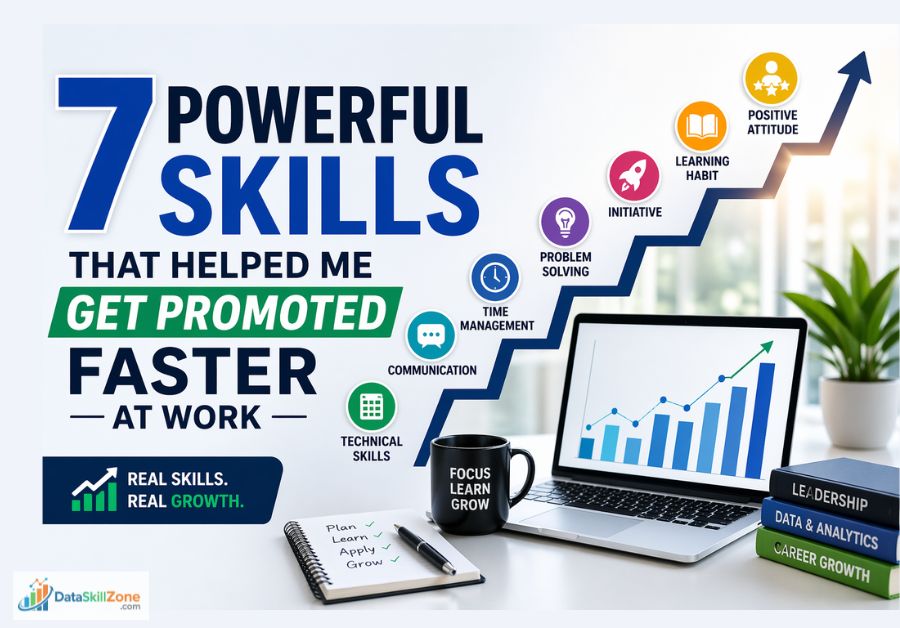
The skills that helped me get promoted faster at work were stronger technical skills, better communication, time management, problem-solving, learning habit, positive attitude, and taking initiative consistently.
Why the Skills That Helped Me Get Promoted Faster Actually Matter
Many professionals believe promotions happen only because of experience or years spent in a company.
However, the skills that helped me get promoted faster were related to communication, problem-solving, initiative, and the ability to contribute meaningful insights to the team.
If you want to accelerate your career growth, start focusing on the same skills that helped me get promoted faster.
Improving communication, learning data analysis tools, and actively participating in projects can significantly improve your professional visibility.
Developing these skills helped me stand out and gain recognition from managers.
The 7 Skills That Changed My Growth
When I Realized Hard Work Was Not Enough

My False Belief’s About Promotion
- I believed that working longer hours was the only way to impress management.
- I used to arrive early, leave late, and accept every task without complaint.
- I thought that being busy all the time meant being valuable.
However, after a few years, I noticed something strange.
Many hardworking employees around me were still stuck in the same position. They were tired, stressed, and frustrated, yet their careers were not moving forward.
Slowly, I understood that companies do not promote employees only because they work hard.
Organizations promote people who create business value, solve problems independently, support team performance, and handle responsibility with maturity. Managers look for professionals who can think logically, communicate clearly, and manage pressure effectively.
Hard work is important, but strategic skills, smart thinking, and professional behavior matter much more for promotion and career growth.
In my early days, I was very proud of myself.
Why?
Because:
- I never said “No” to work.
- I stayed late in office.
- I replied to emails as quickly as possible.
- I completed tasks before dealine.
I thought this was enough.
But slowly, I noticed something painful.
Some people who worked less than me were moving ahead.
They were getting:
- Better projects
- More visibility
- More respect
- Better salary
And I was still “just another employee”.
I was feeling very bad at that time.
That’s when I understood:
Being busy is not equal to being valuable.
Promotion Myths vs Reality
How I Improved My Technical Skills (After Many Mistakes)
One honest truth about my early professional life is that I was doing my job in an average way. My reports were acceptable, my Excel files were usable, and my data work was correct most of the time.
But “acceptable” is not enough in a competitive corporate world. Average performance does not create impact. It does not build a reputation.
And it definitely does not lead to faster promotion.
I decided to upgrade my technical skills and job-specific knowledge seriously.
Therefore,
- I focused on mastering Excel formulas, improving report presentation, understanding business data, and reducing manual errors.
- I started checking my work multiple times before submission.
- I learned shortcuts, dashboards, and automation techniques.
- I treated every task as an opportunity to improve my professional credibility.
Sometimes I practiced after dinner. Sometimes on Sunday.
Slowly, my work improved.
After some months:
- My reports were used directly
- Less corrections came back
- Seniors started trusting me
That’s when I learned:
Skills create respect silently.
Strong data skills also play an important role in many modern roles such as MIS and analytics. For better idea, you can read more on my daily workflow as an MIS executive
One of the biggest skills that helped me get promoted faster was improving the quality and accuracy of my daily work.
How I Slowly Became Confident in Communication

Earlier, I was not confident in speaking English or expressing my ideas in meetings. I always worried about grammar mistakes, pronunciation, and negative judgment.
Because of this fear, I avoided speaking in front of seniors. Even when I had good suggestions, I kept quiet. This habit was limiting my professional visibility and reducing my chances of career advancement.
One day, my senior told me honestly, “Your work is good, but you don’t communicate enough.”
That sentence changed my thinking.
I understood that good work without communication is invisible. So I decided to improve my workplace communication skills step by step.
I started speaking in small meetings, asking simple questions, reading professional articles aloud, and practicing daily conversations in English.
I practiced English while walking.
I talked to myself sometimes. (Yes, really 😄)
In the beginning, I felt awkward.
But later, I felt free.
Now:
- I speak without fear
- I explain my work
- I share ideas
Communication changed my confidence.
Clear communication also helps professionals present their achievements effectively during performance reviews and resume screening.
Another of the skills that helped me get promoted faster was learning how to speak clearly and explain ideas with confidence.
How Time Management Changed My Stress Level
Earlier, my work routine was disorganized. I often postponed tasks, wasted time on mobile phones, and rushed deadlines at the last moment. This habit created unnecessary stress, mistakes, and pressure during month-end reporting.
Even though I was working hard, I always felt tired and mentally exhausted.
Then I told myself, this is not going to work, I have to do something to overcome this.
So,
- I decided to change my work discipline.
- I started planning my day in advance, creating daily task lists, setting priorities, and completing important work first.
- I reduced distractions and focused on productivity.
- I also learned to estimate time properly and avoid last-minute rush.
Slowly, my work became more systematic and professional.
Simple habits.
Big result.
Now:
- Less stress
- Less mistakes
- More control
Discipline gave me peace.
How Learning Became My Secret Weapon

Skills alone cannot guarantee success if your attitude is negative. Earlier, I used to complain about workload, management decisions, and office pressure.
I sometimes blamed others for mistakes. Slowly, I realized that this mindset was damaging my reputation.
I worked on developing a professional attitude. I learned to accept feedback, stay calm under pressure, respect all colleagues, and behave ethically.
Instead of focusing on problems, I focused on solutions. Instead of gossiping, I focused on self-improvement.
Many people stop learning after job.
I was also like that.
“Office is over. That’s enough.”
But skills get old.
Software changes.
Trends change.
So I started learning again.
Small steps:
- 20 minutes YouTube
- One course per month
- Reading blogs
- Practicing at night
Sometimes I felt lazy.
Sometimes I skipped.
But I never stopped fully.
Today, learning gives me confidence.
According to career insights shared on the LinkedIn Talent Blog, professionals who actively contribute ideas, collaborate effectively, and continuously improve their skills often position themselves for faster promotions.
My Life Before and After Self-Improvement
🔹 Before: My Life Before Self-Improvement
Before starting my self-improvement journey, I had very low confidence and often doubted my own abilities at work.
My performance was average, I felt scared to speak in meetings, and I avoided sharing my ideas because I feared making mistakes.
Due to this mindset, my career growth was very slow, and I felt stuck in the same position for a long time.
🔹 After: My Life After Self-Improvement
After working on myself every day, I slowly developed better skills, stronger communication, and more confidence in my abilities.
People started trusting my work, my thinking became clearer, and I began handling challenges with a positive, growth-focused mindset.
This change did not happen through magic; it happened because of daily effort, learning, practice, and never giving up on myself
If you are planning to move into analytics roles, I have already shared a detail guide on the MIS to data analyst career transition article.
Before vs After My Self-Improvement Journey
What Really Helped Me Get Promoted
If I remove everything else, these are the habits and skills that made the biggest difference in my career growth.
Good Skills
Strong technical ability improves the quality, speed, and reliability of your work.
Clear Communication
Good work becomes more valuable when you can explain it clearly and confidently.
Discipline
Consistent habits, deadlines, and focus create trust over time.
Helping Nature
Supporting teammates and solving shared problems increases your professional reputation.
Learning Habit
Continuous learning keeps your skills relevant and your growth moving forward.
Positive Attitude
A calm, solution-focused mindset helps you handle pressure professionally.
No shortcut. No trick. Only consistency.
Small improvements repeated daily can create major career growth over time.
Common Habits That Quietly Delay Promotion
Sometimes career growth becomes slow not because people lack talent, but because small habits keep reducing their visibility and value over time.
Waiting to Be Noticed
Many employees assume hard work will automatically get attention, but visibility often comes from communicating value clearly.
Avoiding Initiative
Professionals who only do assigned work may appear reliable, but not always promotion-ready.
Not Learning New Tools
When skills remain outdated, career growth often becomes slower even if effort stays high.
Poor Time Management
Last-minute work, repeated mistakes, and rushed deadlines reduce trust over time.
When I look back now, I realize the skills that helped me get promoted faster were simple habits repeated consistently over time.
The Moment I Became Promotion Ready
My promotion journey did not change on the day I received recognition. It changed much earlier — on the day I stopped waiting for others to notice me and started improving myself quietly.
I began learning after work, improving my communication, taking more ownership, and focusing on creating value instead of only completing tasks. Nobody applauded those small changes in the beginning, but they slowly changed how people saw my work.
That is when I understood something important:
Promotion often starts before the promotion letter.
It starts when your habits improve, your skills grow, your mindset changes, and your daily work becomes stronger than it was yesterday.
Final Words From My Heart
If you are reading this and thinking:
“I am also stuck…”
Then listen.
You are not weak.
You are just unprepared.
Start today.
Not tomorrow.
Not next month.
Today.
Even 1% improvement daily changes life
I am proof.
And you can be too.
For a long time, I believed promotion was based on luck and favoritism. Today, I know the truth.
Promotion is built silently through daily improvement, self-discipline, and consistent performance. It is created when nobody is watching and nobody is praising.
If you start improving yourself today, even in small ways, your confidence will grow, your skills will sharpen, your income will improve, and your future will become stronger.
If you build the same skills that helped me get promoted faster, your career growth can also become stronger and faster.
Trust the process. Focus on learning. Invest in yourself. Success will follow naturally.
Promotion Readiness Checklist
- I can explain my work clearly
- I improve my skills regularly
- I solve problems instead of waiting passively
- I manage deadlines with discipline
- I contribute value beyond routine tasks
If you practice these same habits consistently, they can become the skills that helped me get promoted faster in my own journey.
Promotion Starts Before Recognition
The habits you build quietly today often become the reason people trust, respect, and promote you tomorrow.
Frequently Asked Questions
Clear answers to the most common questions about promotions, workplace growth, and the skills that help professionals move ahead faster.
Can improving data skills help professionals get promoted faster?
Yes. Many companies rely on data-driven decisions, so employees who can analyze information, create reports, and present insights clearly often gain higher visibility and stronger promotion opportunities.
Do managers notice employees who take initiative?
Yes. Managers often value professionals who solve problems proactively, improve processes, and support the team without waiting to be asked. Initiative is a strong leadership signal.
Does visibility in team meetings affect promotion chances?
Yes. Employees who communicate ideas clearly, ask thoughtful questions, and contribute to discussions are more likely to be recognized for leadership potential and professional maturity.
Can learning new tools outside of work improve career growth?
Absolutely. Learning tools such as Excel, SQL, Power BI, automation platforms, or presentation skills outside of work can significantly improve long-term career opportunities.
Is hard work alone enough for promotion?
Hard work is important, but promotions usually depend on a combination of results, communication, reliability, initiative, business value, and the ability to handle responsibility effectively.
What habits help employees grow faster at work?
Consistent learning, clear communication, strong time management, taking ownership, helping others, solving problems, and maintaining a positive attitude are habits that often accelerate growth.

3 Comments