

 By
By Introduction
Many candidates struggle with how to explain career gaps in interviews professionally without sounding unprepared or nervous.
Some try to avoid the topic completely, while others overexplain every personal detail. Both approaches usually create a poor impression.
Most people assume the situation is worse than it actually is.
A break in employment is no longer unusual.
Many professionals pause their careers because of family situations, layoffs, health concerns, relocation, skill learning, burnout, or career changes.
In recent years, companies themselves have gone through hiring freezes, restructuring, and downsizing. Because of this, recruiters regularly meet candidates who have gaps in their resumes.
From what I have observed in practical workplaces, interviewers are usually less worried about the gap itself and more interested in how the candidate talks about it. Someone who answers calmly and honestly often leaves a stronger impression than a person trying too hard to hide the truth.
In this article, we will discuss how to explain career gaps professionally during interviews, common mistakes candidates make, practical answer examples, resume tips, and ways to speak confidently even if you have a long employment break.
Why Career Gaps Have Become More Common
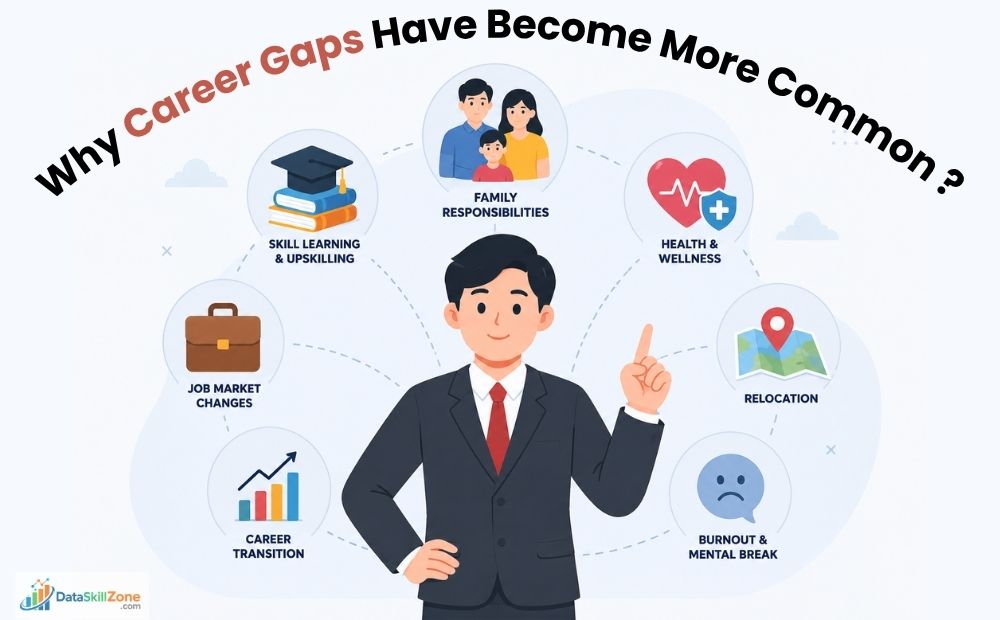
A few years ago, continuous work experience was considered extremely important. Today, careers are far less predictable.
- People switch industries more frequently.
- Some employees leave jobs to learn new skills.
- Others take time off because of personal responsibilities or mental exhaustion.
Many people also ended up with unexpected job gaps because companies slowed hiring, reduced staff, or went through business changes.
In fields like MIS, Data Analytics, IT, reporting, digital marketing, and software development, skill upgrades happen constantly. It is very normal now for professionals to step back temporarily and focus on learning tools such as:
- Excel Automation
- SQL
- Power BI
- Tableau
- Reporting Systems
- or Analytics Platforms
Because of this shift, hiring managers are slowly becoming more flexible about employment gaps than they were earlier.
What Interviewers Actually Think About Career Gaps
Most candidates assume recruiters instantly reject resumes with employment breaks. That is not always true.
In many cases, recruiters mainly want clarity.
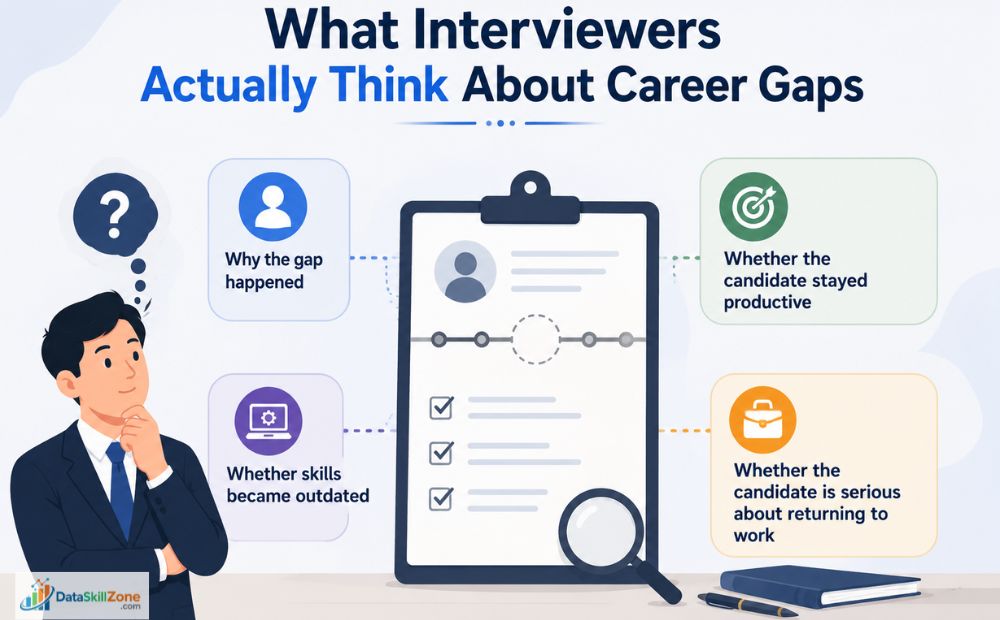
They usually try to understand:
- Why the gap happened
- Whether the candidate stayed productive
- Whether skills became outdated
- and Whether the candidate is serious about returning to work
One thing many job seekers fail to realize is that interviewers speak to dozens of candidates every week. Career-gap questions are extremely common for them.
The problem usually begins when candidates:
- Become defensive
- Give confusing timelines
- Panic
- or Provide different answers in different places
A simple and confident explanation works much better than a dramatic or overly detailed one.
Common Reasons People Take Career Breaks
Each career gap has its own background and circumstances. Every person’s situation is different.
Some of the most common reasons include:
Most recruiters already know these situations happen in real life.
The Biggest Mistake Candidates Make
One of the worst things candidates do is trying too hard to make the gap “look perfect.”
Experienced interviewers can usually identify rehearsed or artificial answers very quickly.
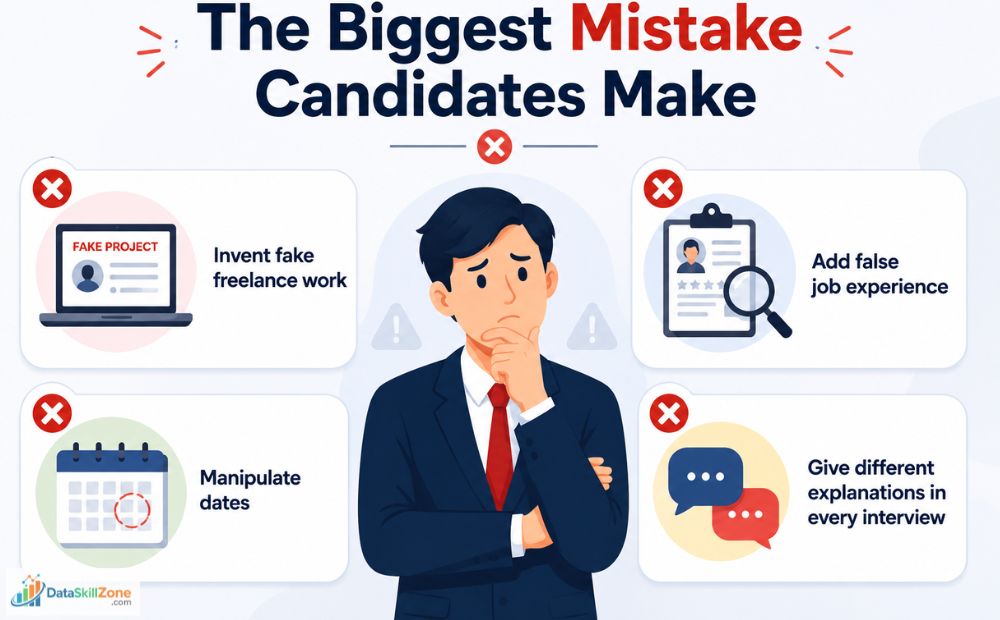
For example, some people:
- Invent fake freelance work
- Add false job experience
- Manipulate dates
- or Give different explanations in every interview
This creates trust issues immediately.
In reality, a genuine explanation delivered professionally is far safer and more effective.
Avoid Personal Oversharing
Another common mistake is emotional oversharing.
Some candidates begin explaining family problems, financial stress, medical situations, or personal struggles in too much detail. This often makes the conversation uncomfortable.
Professional interviews do not require your full life story.
A better approach is:
- Acknowledge the situation briefly
- Keep the tone professional
- and Shift the focus toward growth or readiness
For example:
Instead of saying:
“I was mentally stressed and dealing with many family issues.”
You can say:
“I had to step away from work for a while because of some personal responsibilities, and during that period, I also focused on improving myself and preparing for better opportunities ahead.”
This sounds calmer, more mature, and more professional.
How to Explain Career Gaps in Interviews Professionally
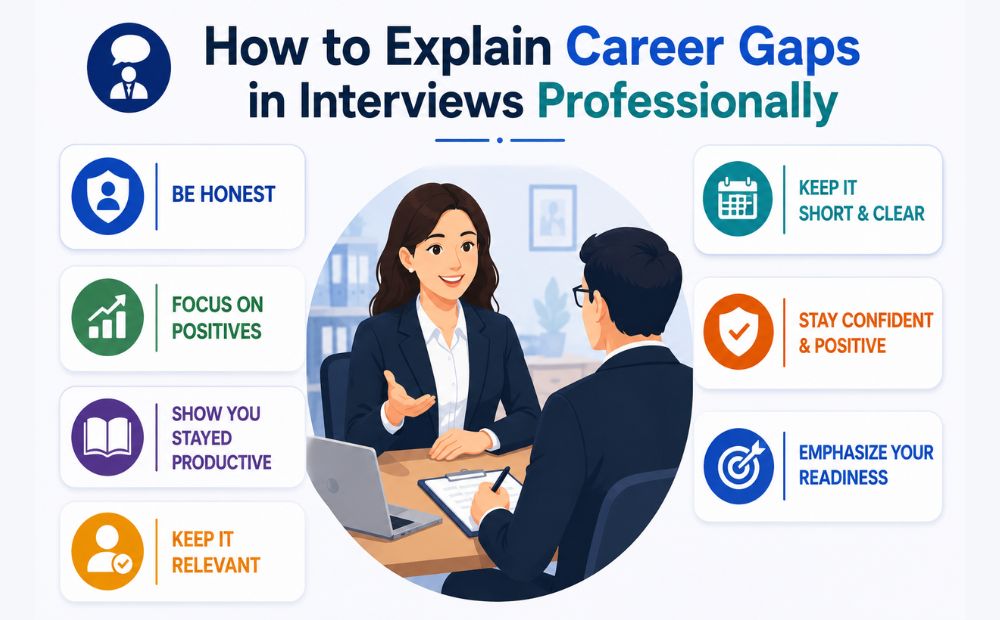
There is no single script that works for everyone. Your answer should match your actual situation.
However, strong answers usually contain three things:
- A short explanation
- Something productive you did during the break
- A confident transition back to work
Let us look at different situations.
Career Break for Skill Development
This is one of the strongest explanations today, especially in analytical and technical roles.
You can say something like:
“During that period, I focused heavily on improving my technical understanding and practical skills. I stayed engaged by learning reporting processes, practicing Excel activities, and strengthening my confidence with analytical work.”
This works even better if you have:
- Certifications
- Dashboards
- Projects
- or Portfolio examples
If the Gap Happened Because of Family Responsibilities
Family-related career breaks are very common.
A calm explanation sounds much better than an emotional one.
Example:
“At that time, I had some important personal responsibilities that required my attention. Once things settled properly, I started updating my skills and preparing to return to work.”
This answer is simple, respectful, and believable.
If You Were Affected by Layoffs
Layoffs are now extremely common across industries.
Instead of sounding frustrated, keep the explanation neutral.
Example:
“The organization made some structural changes, and unfortunately my role was impacted during that transition. After that, I used the transition period to strengthen my skills and explore better opportunities.”
Avoid blaming the company aggressively.
If You Changed Career Direction
Many professionals today shift from operations roles into analytics, reporting, business intelligence, or technology.
Example:
“I realized I wanted to move into a more analytical role, so I invested time in learning reporting systems, Excel automation, and data-focused tools before applying again.”
This makes the gap sound purposeful instead of accidental.
If You Are a Fresher With a Gap After Graduation
Freshers often worry about gaps after college.
In reality, many graduates spend time:
- Preparing for jobs
- Learning skills
- Building projects
- or Figuring out career direction
Professional example:
“After finishing my studies, I focused on becoming more confident with practical work and understanding what companies actually expect from freshers before applying for jobs.”
Why Confidence Changes Everything
Sometimes the same answer sounds good from one candidate and weak from another.
The difference is confidence.
A candidate who speaks calmly usually appears:
- More trustworthy
- More mature
- and More prepared
On the other hand, candidates who panic often make interviewers suspicious even when the reason itself is completely valid.
From what I have seen in workplace environments, communication style often influences interview outcomes almost as much as technical skill.
Practical Things You Can Do During a Career Gap
One smart way to reduce concerns about employment gaps is to stay productive during the break.
This does not always mean formal employment.
Useful activities include:
- Online Certifications
- Excel Practice
- Dashboard Creation
- Freelance Work
- LinkedIn Learning
- Portfolio Projects
- Internships
- or Improving Communication Skills
Even small learning efforts can make a huge difference during interviews.
How to Mention Career Gaps in Resume
Some candidates try to hide employment gaps completely. That approach can backfire later.
Instead, manage the timeline properly.
For example:
Skill Development & Training
2025 – 2026
- Advanced Excel Practice
- Dashboard Reporting
- SQL Basics
- Power BI Learning
- Practical Data Projects
This immediately looks more productive than leaving an empty timeline.
Avoid These Interview Mistakes
Here are some mistakes that frequently damage otherwise good interviews.
Giving Long Emotional Answers
Keep explanations short and stable.
Speaking Negatively About Old Employers
Even if your previous workplace was difficult, avoid emotional criticism.
Looking Ashamed About the Gap
A career break should not sound like a personal failure.
Giving Different Timelines
Consistency across your resume, LinkedIn, and interview answers helps create a trustworthy impression.
Sounding Unprepared
Many candidates struggle simply because they never practiced answering the question beforehand.
What Recruiters Care About More Than Career Gaps
Most hiring managers today care far more about:
- Problem-Solving Ability
- Communication
- Adaptability
- Learning Mindset
- and Practical Work Skills
For example, a candidate with:
- Strong Excel knowledge
- Dashboard experience
- Reporting skills
- and Professional communication
may still outperform someone who has continuous experience but outdated skills.
This is especially true in:
- MIS reporting
- Data Analytics
- Operations
- Digital Role
- and Business Support Functions
Real Workplace Observation
One thing I have personally noticed is that many candidates worry about career gaps far more than recruiters do.
In real office environments, managers are usually more interested in:
- Whether deadlines can be handled
- Whether reports are accurate
- Whether communication is professional
- and Whether the employee can adapt quickly
A confident candidate with practical skills often creates a stronger impression than someone with a perfect timeline but weak communication.
How to Prepare Before Interviews
Before attending interviews, prepare your answer properly instead of improvising under pressure.
Create:
- One short version
- One detailed version
- and One natural conversational version.
Also prepare:
- Updated resume
- LinkedIn profile
- Certifications
- Portfolio links
- and Project examples
Preparation reduces nervousness significantly.
Final Thoughts
Modern careers rarely follow a perfectly straight line anymore.
Employment gaps have become increasingly common across industries, especially after changing work trends and economic shifts.
The important thing is not hiding the gap. The important thing is explaining it professionally.
A simple, honest, and confident explanation usually works much better than trying to sound overly perfect.
Interviewers generally understand that people go through:
- Career changes
- Family responsibilities
- Layoffs
- Learning phases
- and Personal challenges
What matters more is whether you used the time constructively and whether you are prepared to move forward professionally again.
If you communicate calmly, show skill growth, and maintain confidence during interviews, a career gap does not have to stop your career progression at all.
Frequently Asked Questions
Helpful answers to common questions about career gaps, employment breaks, interview explanations, resume gaps, and professional communication during job interviews.
Is a career gap bad for getting a job?
No, career gaps are quite common today. Recruiters usually focus more on your skills, confidence, communication, and how professionally you explain the gap during the interview.
How do I explain a career gap professionally?
The best approach is to stay honest, keep the explanation short, and mention how you used that time productively through learning, personal responsibilities, certifications, or skill development.
Should I mention career gaps in my resume?
Yes, instead of hiding the gap, explain it professionally by mentioning learning activities, practical projects, certifications, freelancing, or skill-building efforts completed during that period.
Can online certifications help during employment gaps?
Yes, certifications in Excel, SQL, Power BI, Data Analytics, or other professional skills can show recruiters that you stayed productive and continued learning during the gap.
How should freshers explain gaps after graduation?
Freshers can explain that they used the time to improve practical skills, understand industry expectations, prepare for interviews, complete certifications, or work on projects before applying for jobs.
Do recruiters reject candidates because of career gaps?
Most recruiters do not reject candidates only because of employment gaps. Problems usually happen when candidates give confusing explanations, inconsistent timelines, or appear unprepared during interviews.