

 By
By Introduction
Many beginners want to practice data skills without real company data, but they assume it is impossible until they join a company. That belief often slows their progress.
Many aspiring data analysts face a common challenge – they want to improve their skills but do not have access to real business datasets.
Learning how to practice data skills without real company data is therefore an important step for beginners who want to build practical experience before getting their first job.
When I first started my learning in data analytics and MIS reporting, I had one big problem which is, I didn’t have access to real company data.
I was learning Excel formulas, SQL queries, and dashboard creation, but deep inside I kept thinking:
- “How will I ever become a professional data analyst without working on real corporate datasets?”
If you are trying to enter the data analyst job market, or you want to switch into business intelligence, SQL development, Power BI dashboards, or data-driven decision making, you might be facing the same doubt.
Let me tell you something honestly; waiting for real company data is one of the biggest mistakes beginners make.
The truth is, companies don’t hire you because you had access to confidential data. They hire you because you can:
- Think analytically
- Solve business problems
- Clean messy datasets
- Build meaningful reports
- Explain insights clearly
And all of that can be practiced without ever touching real company data.
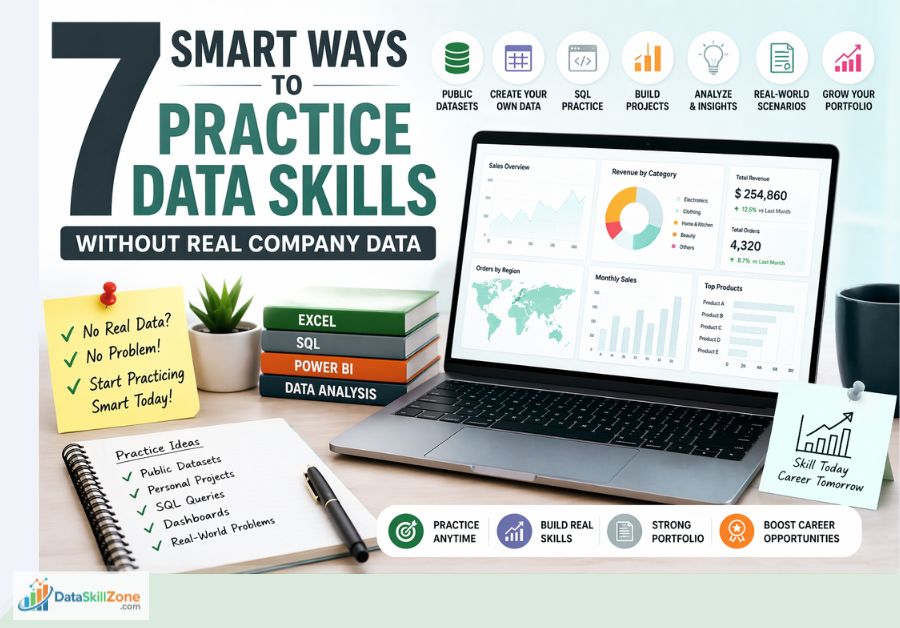
You can practice data skills without real company data by using public datasets, creating your own business data, solving SQL problems, building portfolio projects, simulating business scenarios, and analyzing public reports.
Wrong Mindset vs Smart Mindset
| Wrong Mindset | Smart Mindset |
|---|---|
| I need real company data first | I can build job-ready skills with practice data |
| Public data is too simple | Public data becomes powerful when used with business questions |
| Projects do not count as experience | Strong projects can prove skill and analytical thinking |
Practical Ways to Practice Data Skills Without Real Company Data
Even if you don’t have access to real company databases, there are still many practical ways to build strong data analysis skills. Beginners can improve their abilities by working with practice datasets, creating small projects, and exploring different analytical tools.
These activities help simulate real-world scenarios and allow learners to develop confidence while working with data.
Best Ways to Practice Data Skills Without Real Company Data
Now that we understand the importance of practice, let’s explore some practical methods you can use to practice data skills without real company data.
1. Start with Public Datasets (Free but Extremely Powerful)
One of the easiest ways to practice data skills without real company data is by using public datasets and solving business questions with them.
Most beginners underestimate publicly available datasets. They think public data is too simple.
That’s not true.
Some of the best data science projects, SQL practice exercises, and business analytics case studies are built using open-source datasets.
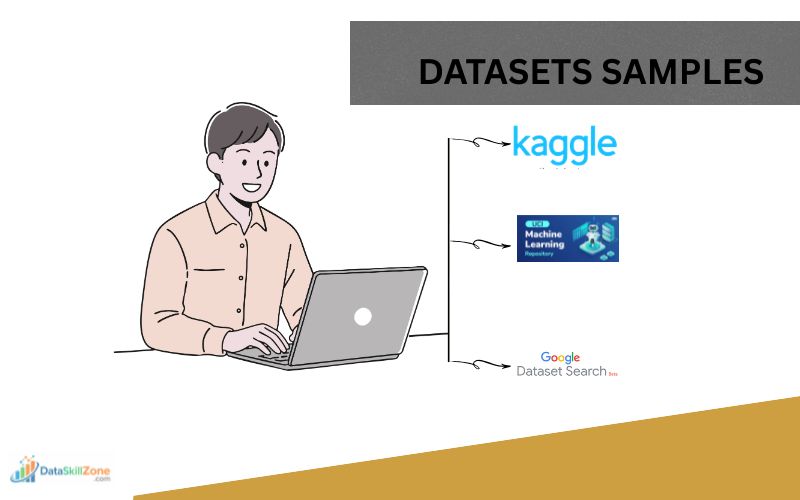
Platforms like:
offer datasets that are large, complex, and very close to real business scenarios.
Initially When I downloaded a simple retail sales dataset, I didn’t just calculate totals. I treated it like I was working inside a real company.
I asked business-level questions like:
- What is the monthly revenue growth rate?
- Which product category has the highest profit margin?
- Which region has declining sales performance?
- What is the average customer acquisition cost?
This kind of practice builds advanced Excel analytics skills, SQL query optimization skills, and business data analysis mindset.
The dataset doesn’t need to be “confidential” to be useful. It just needs to be used intelligently.
2. Create Your Own Business Dataset (This Changes Everything)
This is something I personally found extremely powerful.
Many beginners look for ways to practice data skills without real company data, especially when they are learning tools like Excel, SQL, or Power BI.
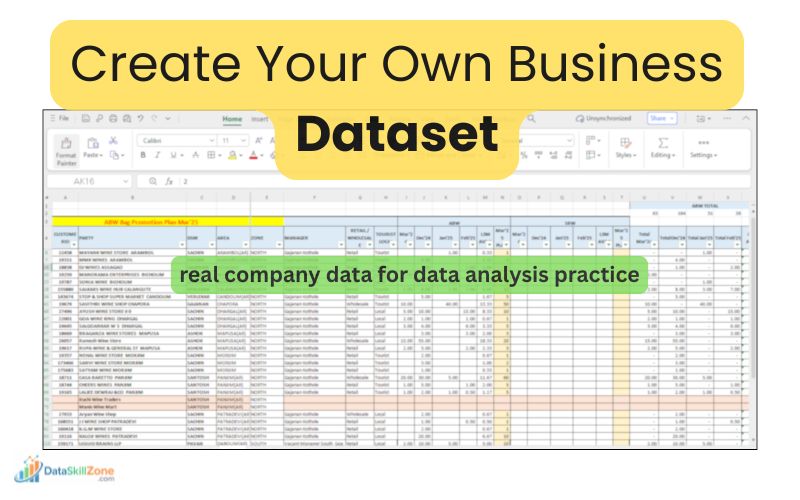
Instead of searching endlessly for “real company data for data analysis practice,” I created my own imaginary company dataset. It may sound simple, but it completely changed my learning curve.
For example, imagine you run:
- A liquor distribution company
- An e-commerce clothing store
- A mobile accessories shop
- A restaurant chain
Now create columns like:
- Invoice Date
- Product Name
- Quantity Sold
- Unit Cost
- Selling Price
- Discount Percentage
- Sales Executive
- City
- Payment Mode
Then generate 1,000–5,000 rows using Microsoft Excel.
Now you can practice:
- Revenue forecasting
- Profit and loss analysis
- Contribution margin calculation
- KPI dashboard creation
- Sales trend analysis
- Customer retention metrics
This is how you develop
- real-world data analysis skills
- Excel dashboard development expertise
- MIS reporting capabilities.
You are not just practicing formulas, you are simulating business intelligence scenarios. I’ve already shared a detailed guide on How I Improved My Excel Skills While Working, which can help you build stronger reporting and analysis skills.
Recruiters love candidates who understand business logic, not just technical functions.
3. Practice SQL Like a Real Database Analyst

You can also practice data skills without real company data by writing SQL queries on sample databases that simulate real business scenarios.
If you want to become a SQL developer, data analyst, or business intelligence professional, SQL is non-negotiable.
Many beginners complain, “I don’t have access to MySQL server or company database.” But today, that is no longer a valid excuse.
You can practice using:
These platforms provide structured SQL interview questions, database query exercises, and real-world analytics scenarios.
But here is what most people miss – don’t just solve questions for the sake of solving. Instead, imagine you are working as a data analyst in a corporate environment.
For example:
- Write a query to calculate monthly revenue trend
- Find top 5 customers by total purchase value
- Identify products with negative growth
- Calculate customer lifetime value
This approach improves your :
- database management skills
- advanced SQL query writing ability
- data-driven decision making expertise.
Real Company Data vs Practice Data
4. Recreate Real Business Problems
Instead of just practicing pivot tables, create business situations like:
Scenario: Sales Dropped by 15% This Quarter
Now ask:
- Is the drop region-specific?
- Is it product-specific?
- Is discount strategy affecting margins?
- Did customer churn increase?
This is how you build strategic business analysis skills, financial data analysis capability, and performance analytics expertise.
Lets take another Scenario:
Scenario: Company Wants to Increase Profit Margin
Now analyze:
- Which products have low profitability?
- Are operational costs rising?
- Which city generates highest net margin?
This kind of practice makes you job-ready for business analyst roles, MIS executive jobs, and corporate data analyst positions.
5. Build Portfolio Projects (Your Experience Substitute)
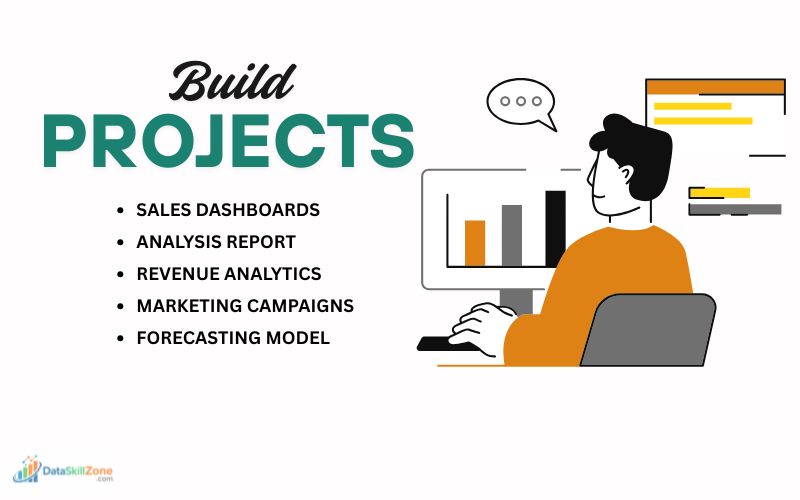
Strong projects created while you practice data skills without real company data can still impress recruiters and hiring managers.
Practicing with datasets can also help you build projects that you can later include in your data analyst portfolio or resume when applying for jobs. If you want guidance, you can also learn how to build a data analyst resume.
If you don’t have corporate experience, your portfolio becomes your experience.
Create strong, practical projects like:
- End-to-end sales dashboard in Excel
- HR attrition analysis report
- E-commerce revenue analytics project
- Marketing campaign performance analysis
- Financial forecasting model
But don’t just upload dashboards.
Explain:
- Business objective
- Dataset source
- Tools used (Excel, SQL, Power BI)
- Key insights
- Strategic recommendations
This shows your data visualization skills, business reporting ability, and analytical problem-solving strength.
Companies do not care about the real data.
They care whether your thinking is real or not.
6. Study Real Companies and Simulate Their Data
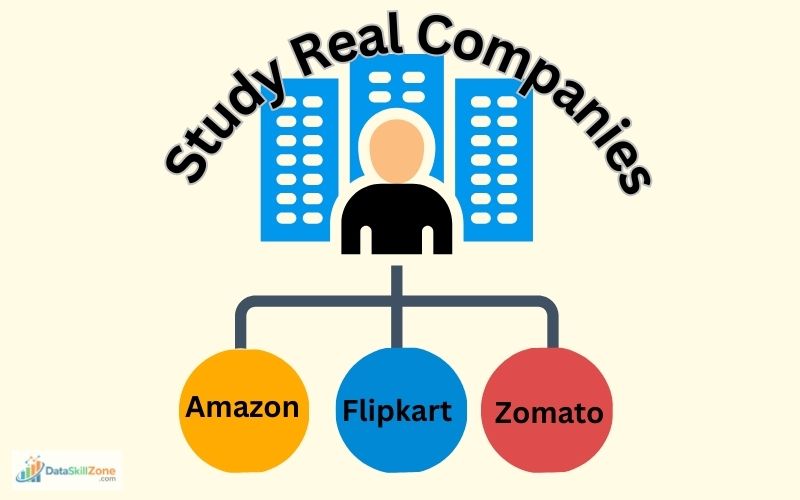
Look at companies like:
- Amazon
- Flipkart
- Zomato
- Swiggy
Study their business model.
For example, think about customer retention analysis for food delivery platforms.
Create a dummy dataset where customers order multiple times.
Now analyze repeat purchase rate, average order value, and delivery time impact on ratings.
This builds
- advanced business intelligence skills
- customer analytics capability
- performance tracking expertise
which are highly paid skills in the data analytics job market.
7. Analyze Public Business Reports
Another effective way to practice data skills without real company data is by analyzing publicly available business reports.
Many companies publish annual reports, financial summaries, and performance statistics that anyone can access.
You can download these reports and convert the information into spreadsheets to practice different data analysis tasks.
For example, you can:
- Extract sales or revenue numbers from reports
- Organize the data in Excel tables
- Create charts to visualize company performance
- Compare yearly growth trends
This method helps beginners understand how real business data is structured and how analysts turn raw numbers into meaningful insights.
The Honest Reality
Real company data does not automatically make someone a good data analyst.
What makes someone valuable in the high-paying data analytics career path is:
- Logical thinking
- Business understanding
- Strong SQL foundation
- Clean dashboard presentation
- Clear communication
You can build all of this without confidential data access.
I personally improved most when I stopped waiting for “real data” and started treating every dataset like a business responsibility.
That mindset shift changed everything.
30-Day Plan to Practice Data Skills
- Week 1: Download 2 public datasets and clean them in Excel
- Week 2: Write SQL queries for trends, top customers, and growth
- Week 3: Build one dashboard in Excel or Power BI
- Week 4: Write insights, recommendations, and add the project to your portfolio
Final Advice (From Practical Experience)
If you want to grow into:
- Data Analyst
- Business Intelligence Analyst
- MIS Executive
- SQL Developer
- Power BI Developer
Then stop focusing on access.
Focus on mastery.
Practice daily. Create your own scenarios. Write business questions. Analyze deeply. Explain insights in simple language.
That is how you build a strong data analytics career even without real company data.
If you stay consistent, you can practice data skills without real company data and still become job-ready for analytics roles.
You Do Not Need Permission to Start Learning
Use the data you can access today, build projects consistently, and let your skills create opportunities tomorrow.
Frequently Asked Questions
Clear answers to the most common questions about practicing data skills without real company data.
How can beginners practice data skills without real company data?
Beginners can practice by using public datasets, creating personal projects, solving business problems, building dashboards, and analyzing open data sources. These methods simulate real work scenarios effectively.
What tools can I use to practice data skills?
Popular tools include Microsoft Excel, SQL, Power BI, Tableau, and Google Sheets. These tools are widely used in real workplaces and are excellent for beginners to practice with sample data.
How long does it take to improve data analysis skills?
Improvement depends on consistency. Many learners notice progress within a few weeks of regular practice, while stronger job-ready skills often take a few months of focused learning and projects.
Can sample datasets help me get a data analyst job?
Yes. Sample dataset projects can be added to your portfolio or resume to demonstrate practical skills, analytical thinking, and familiarity with tools used in data roles.
Where can I find free datasets for practice?
You can find free datasets on platforms such as Kaggle, Google Dataset Search, government open data portals, UCI Repository, and Data.world.
What are the best beginner projects for practicing data skills?
Strong beginner projects include sales dashboards, monthly expense analysis, HR attrition reports, inventory trackers, customer trend analysis, and website traffic visualizations.

8 Comments