

 By
By Introduction
The job market is evolving faster than ever. Companies today rely on data, structured processes, and measurable outcomes instead of assumptions. Because of this shift, analyst roles have become some of the most valuable careers in modern business.
Organizations need professionals who can solve problems, improve systems, reduce errors, study trends, and help leaders make better decisions. That is where analyst careers stand out.
Many job seekers search for terms like business analyst job, business analyst salary, quality analyst, data analyst internship, and intelligence analyst because these roles offer growth, stability, and future opportunities.
The best part is that analyst careers are open to many backgrounds. Whether you studied commerce, management, computer science, engineering, or another field, there is an analyst path that can match your strengths.
You can also follow this complete data analyst career roadmap to understand long-term growth opportunities.
In this guide, you will learn what these roles mean, what skills you need, salary expectations, internship opportunities, and how to start your career in 2026.
A business analyst job is a strong career option in 2026 for people who enjoy problem solving, reporting, and improving business processes. Learning Excel, SQL, Power BI, communication, and business basics can help you grow into higher-paying analyst roles with long-term career opportunities.
What Is a Business Analyst Job?
A business analyst job focuses on improving how a company works. Business analysts identify problems, understand business needs, and recommend better solutions.
They often act as a bridge between management teams and technical teams. They collect requirements, organize ideas, and help convert business challenges into clear actions.
For example, a company may need faster reporting, a smoother customer process, lower costs, or better tracking systems. A business analyst studies the current process and helps create improvements.
Common Responsibilities
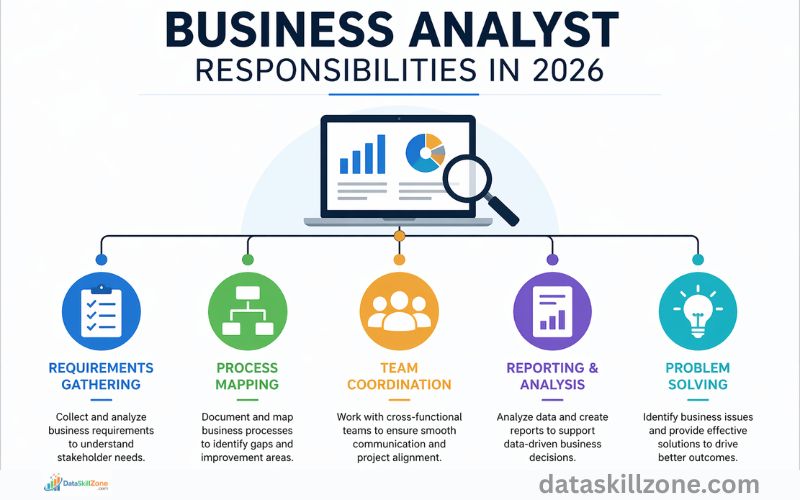
- Gather business requirements
- Understand workflows and pain points
- Create documents and process maps
- Coordinate with technical teams
- Track project progress
- Support testing of new solutions
- Prepare reports for management
- Recommend efficiency improvements
Industries Hiring Business Analysts
Business analysts are needed in almost every industry:
- Banking
- IT services
- E-commerce
- Healthcare
- Manufacturing
- Logistics
- Insurance
- Government projects
Because of this wide demand, a business analyst job remains one of the strongest career options today.
Business Analyst Salary in 2026

A major reason people search for a business analyst salary is the earning potential of this role. Salaries depend on experience, location, company size, industry, and skills.
Freshers usually begin with entry-level packages, while experienced analysts with strong technical and communication skills can earn significantly higher salaries.
Salary Growth Factors
Your salary can improve faster if you learn:
- Advanced Excel
- SQL
- Power BI or Tableau
- Requirement gathering
- Agile tools
- Process improvement methods
- Stakeholder communication
- Presentation skills
Professionals who understand both business needs and reporting tools often grow faster than others.
Skills can directly impact your business analyst job salary potential.
Business Analyst Salary Comparison
What Does a Quality Analyst Do?
A quality analyst ensures that products, services, or internal processes meet required standards. Their main goal is to reduce mistakes, improve consistency, and increase customer satisfaction.
This role exists in many industries and is not limited to software testing.
In software companies, quality analysts test websites, apps, and systems to find bugs before customers face issues.
In BPO or customer service environments, they review calls, chats, and support interactions to maintain service quality.
In manufacturing, they inspect products and processes to ensure quality standards are met.
Important Skills for Quality Analysts
A quality analyst needs a mix of observation, process knowledge, communication, and problem-solving ability. These skills help improve standards, reduce repeated mistakes, and support better business performance.
The quality analyst role is ideal for people who naturally notice details and enjoy improving systems.
Why a Data Analyst Internship Is a Great Starting Point
If you are new to analytics, a data analyst internship can be one of the smartest ways to enter the industry.
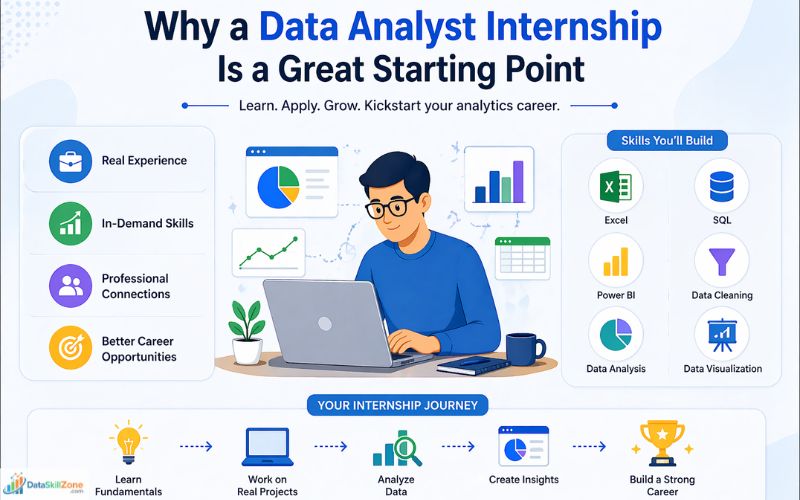
Many companies prefer candidates with practical exposure. Internships help beginners gain real experience, learn business reporting, and understand how data supports decisions.
Instead of only studying theory, interns work with actual tasks, deadlines, and team expectations.
What You Can Learn During an Internship
- Excel reporting
- Data cleaning
- Dashboard creation
- SQL basics
- Business KPIs
- Visualization skills
- Presentation techniques
- Problem solving
Typical Internship Tasks
A data analyst intern may help with:
- Daily sales reports
- Product performance summaries
- Cleaning duplicate records
- Updating dashboards
- Creating charts for managers
- Basic trend analysis
Even a short internship can build confidence and improve your chances of getting a full-time role later.
What Is an Intelligence Analyst?
An intelligence analyst collects information, studies patterns, and turns findings into useful insights for decision-makers.
This role is common in multiple sectors such as:
- Security organizations
- Cybersecurity companies
- Risk management firms
- Market research agencies
- Corporate strategy teams
- Government departments
The purpose of the role is to gather information from multiple sources, identify trends, evaluate risks, and prepare strategic reports.
Common Tasks of Intelligence Analysts
- Competitor tracking
- Risk analysis
- Fraud pattern monitoring
- Industry forecasting
- Strategic reporting
- Research summaries for leadership teams
Skills Required
- Research ability
- Critical thinking
- Analytical mindset
- Pattern recognition
- Reporting skills
- Strong writing
- Confidentiality
- Decision support thinking
The intelligence analyst role is suitable for people who enjoy research and connecting insights from different sources.
Which Analyst Career Is Best for You?
The best analyst role depends on your strengths, interests, and working style.
Analyst Roles Comparison in 2026
Different analyst roles focus on different strengths such as communication, reporting, quality control, or research. The best role for you depends on your interests, skills, and long-term career goals.
- Choose a business analyst, if you enjoy communication, understanding business problems, and working with teams.
- Choose a quality analyst, if you like structure, checking details, and improving standards.
- Choose a data analyst, if you enjoy working with numbers, dashboards, Excel, SQL, and reports.
- Choose an intelligence analyst, if you enjoy research, strategic thinking, and studying trends.
There is no single “best” role for everyone. The right role is the one that matches your natural strengths and long-term goals.
Essential Skills for Analyst Jobs in 2026
No matter which path you choose, some skills are valuable in every analyst career.
Technical Skills
- Excel
- SQL
- Power BI
- Tableau
- Google Sheets
- Reporting tools
- Documentation software
Soft Skills
- Communication
- Problem solving
- Time management
- Teamwork
- Critical thinking
- Presentation skills
Bonus Skills
- AI tools
- Prompt writing
- Business understanding
- Process mapping
- Stakeholder management
Professionals who combine technical ability with strong communication often stand out in interviews and promotions.
Real Day-to-Day Work of an Analyst
Many beginners understand job titles but do not know what daily work actually looks like. In reality, analyst roles involve solving business problems, preparing reports, communicating with teams, and improving decisions.
A normal day may start with checking emails, reviewing business updates, and understanding urgent priorities. After that, analysts often work on reports, dashboards, meetings, or process improvements depending on the role.
Example Daily Tasks
Business Analyst
- Attend meetings with managers or clients
- Understand business problems
- Write requirements documents
- Follow up with technical teams
- Track progress of projects
Data Analyst
- Update reports and dashboards
- Clean raw data files
- Check trends and patterns
- Create charts for management
- Share performance insights
Quality Analyst
- Review calls, chats, or products
- Identify mistakes or defects
- Prepare quality reports
- Suggest improvements
- Track performance scores
Intelligence Analyst
- Research competitors or market trends
- Study risks and patterns
- Prepare strategic reports
- Support decision-making teams
How to Get a Business Analyst Job Without Experience
Many beginners assume they need years of experience before applying. That is not always true. You can build a strong profile even as a fresher.
Step 1: Learn Core Tools
Start with practical tools like:
- Excel
- SQL
- Power BI
- Basic documentation methods
Step 2: Build Practice Projects
Create simple projects such as:
- Sales dashboard
- Attendance tracker
- Expense report
- Customer complaint analysis
Projects show employers that you can apply your skills.
Step 3: Improve Your Resume
Focus on achievements, tools, and projects instead of only education details.
Step 4: Apply on the Right Platforms
Use:
Step 5: Prepare for Interviews
Practice common questions like:
- Tell me about yourself
- Why do you want a business analyst job?
- How do you solve problems?
- Explain a dashboard or project you created
Consistent preparation can help you get opportunities faster than you expect.
Analyst Career Growth Path (0 to 10 Years)
One of the biggest benefits of analyst careers is long-term growth. You can start from an entry-level position and move into leadership roles with experience, strong performance, and continuous skill development.
The more business value you create, the faster your career can grow.
Resume Tips for Analyst Roles
Your resume should clearly show your value to employers. If you need help creating a strong data analyst resume, read our complete ATS-friendly resume guide.
Important Sections to Include
- Professional summary
- Skills
- Tools
- Projects
- Experience
- Education
- Certifications
Use Achievement-Based Language
Instead of writing:
Worked on reports
Write:
Created reports that reduced manual work and improved visibility for management.
Add Relevant Keywords Naturally
Use role-specific keywords that match job descriptions, such as:
- Business analyst job
- Business analyst salary
- Quality analyst
- Data analyst internship
- Intelligence analyst
- SQL
- Excel
- Dashboard reporting
This can improve visibility in ATS screening systems.
Certifications That Can Help
Certifications are not mandatory, but they can strengthen your profile and build confidence.
Useful options include:
- Google Data Analytics Certificate
- Microsoft Excel Certification
- Power BI Courses
- SQL Courses
- Agile or Scrum Basics
- Business Analysis Foundations
Certificates are most valuable when combined with hands-on projects.
A popular beginner option is the Google Data Analytics Certificate.
Best Tools to Learn for Analyst Jobs in 2026
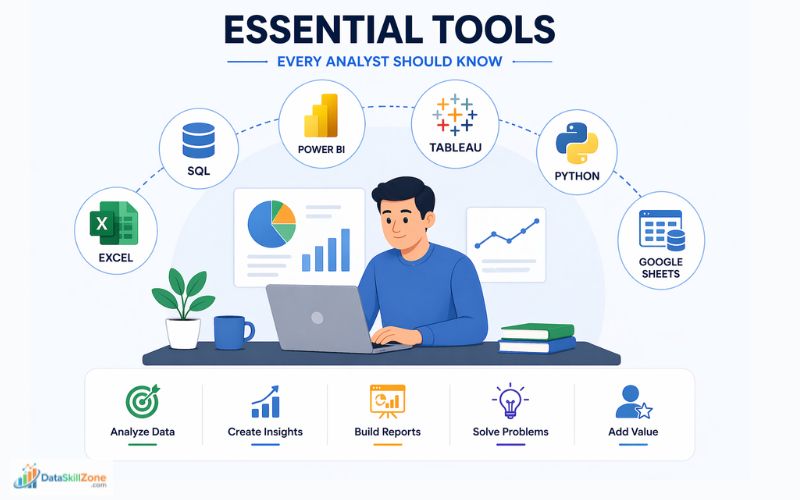
Tools can increase your productivity, salary potential, and confidence. You do not need to learn everything at once. Start with the basics, then grow step by step.
If you are confused about where to begin, compare Excel vs SQL vs Power BI before choosing your first skill.
Must-Learn Tools for Analyst Jobs
The right tools help analysts work faster, improve accuracy, and create better business results. You do not need to learn everything at once, but mastering the tools below can significantly improve your job opportunities and long-term growth.
Best Learning Order
- Excel
- SQL
- Power BI
- Communication Skills
- Projects
- AI Productivity Tools
This roadmap prevents confusion and helps beginners focus on what matters most first.
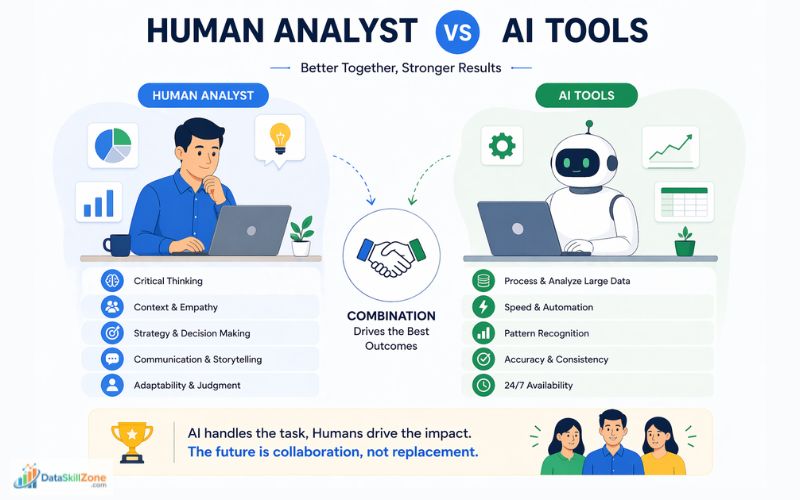
Will Analyst Jobs Be Replaced by AI?
One of the most common concerns in 2026 is whether AI will replace analyst jobs. The short answer is no, but the role of analysts is changing.
AI can automate repetitive tasks such as cleaning data, generating summaries, creating charts, or drafting reports. This means some manual work that once took hours can now be completed much faster.
However, companies still need human analysts for responsibilities that require judgment, communication, and business understanding.
AI can provide outputs, but it cannot fully understand company goals, stakeholder expectations, office politics, customer emotions, or strategic priorities in the same way a person can.
For example, AI may generate a dashboard, but a human analyst decides which metrics matter most and how leaders should act on the results. AI may identify a trend, but an analyst explains why it happened and what actions should be taken next.
What Will Change Instead of Disappear
Analyst jobs are more likely to evolve than disappear. Professionals who only do repetitive manual tasks may face more competition, while analysts who combine tools with critical thinking will become more valuable.
Future analysts will spend less time on basic manual work and more time on:
- Interpreting insights
- Solving business problems
- Communicating with stakeholders
- Making recommendations
- Improving processes
- Using AI tools productively
How to Stay Valuable in the AI Era
The best way to stay competitive is to grow beyond basic tasks.
Focus on:
- Excel, SQL, and dashboard tools
- Business understanding
- Communication skills
- Problem solving
- Decision-making ability
- Learning how to use AI tools effectively
AI is not the end of analyst careers. It is a productivity tool that can help analysts work faster and smarter.
Human Analysts vs AI Tools: What’s the Real Difference in 2026?
Remote Opportunities in Analyst Careers
Many analyst jobs are now remote or hybrid because much of the work is digital.
Remote analyst work may include:
- Dashboard reporting
- Data cleaning
- Requirement meetings
- Documentation
- Research analysis
- KPI tracking
This creates opportunities to work for companies beyond your local city once your skills become stronger.
Common Mistakes to Avoid
Many candidates work hard but still struggle to get interviews or career growth because of avoidable mistakes. Fixing these common issues can improve your progress faster than learning another tool.
90-Day Career Roadmap for Analyst Jobs
A focused 90-day plan can help beginners build job-ready skills faster. Instead of learning everything randomly, follow a step-by-step roadmap covering tools, projects, and interview preparation.
Month 1: Build Core Foundations
Start with the most important beginner tool: Excel. Learn how data works and build confidence with basic reporting tasks.
Focus Areas: Excel formulas, Pivot Tables, charts, data cleaning, formatting, basic reporting.
Month 2: Learn SQL & Analysis Skills
Once you understand spreadsheets, move to SQL. This helps you work with larger datasets stored in databases.
Focus Areas: SELECT, WHERE, GROUP BY, ORDER BY, JOINS, filters, business insights from data.
Month 3: Build Projects & Get Job Ready
Turn your learning into proof. Build projects, improve your resume, and begin applying for internships or entry-level analyst jobs.
Focus Areas: Power BI dashboards, portfolio projects, resume updates, LinkedIn profile, interview practice, job applications.
Final Thoughts
Analyst careers continue to grow because companies need better decisions, cleaner processes, and stronger insights.
Whether you choose a business analyst job, aim for a higher business analyst salary, start with a data analyst internship, build a future as a quality analyst, or explore opportunities as an intelligence analyst, the opportunities are real in 2026.
Start with one skill, complete one project, improve one resume, and apply consistently.
Small progress repeated every day can create a powerful career change.
Frequently Asked Questions
Clear answers to the most common questions about business analyst jobs, analyst salaries, internships, AI impact, and career growth in 2026.
Is a business analyst job a good career in 2026?
Yes, a business analyst job remains one of the best career options because companies need professionals who can improve processes, solve business problems, and support smarter decisions.
What is the average business analyst salary in India?
Salary depends on city, company, and experience. Freshers may begin with entry-level packages, while experienced analysts with Excel, SQL, Power BI, and communication skills can earn much higher salaries.
Can I become an analyst without coding?
Yes. Many analyst roles focus more on reporting, dashboards, Excel, business understanding, and communication. Basic SQL is helpful, but heavy coding is not required for many entry-level jobs.
Will AI replace analyst jobs completely?
No. AI can automate repetitive tasks, but companies still need human analysts for business judgment, stakeholder communication, problem solving, and turning insights into action.
How can I get a data analyst internship as a beginner?
Start with Excel, SQL basics, and dashboard concepts. Build small projects, improve your resume, and apply consistently on LinkedIn, Internshala, Indeed, and company career pages.
Which analyst role is best for beginners?
Business analyst, quality analyst, and data analyst roles are all beginner-friendly. Choose based on whether you enjoy communication, detail checking, or working with data and reports.